Innovative Case Sharing
Case 1: Real-time Vehicle Stabilization System and Its Method (RVSS)
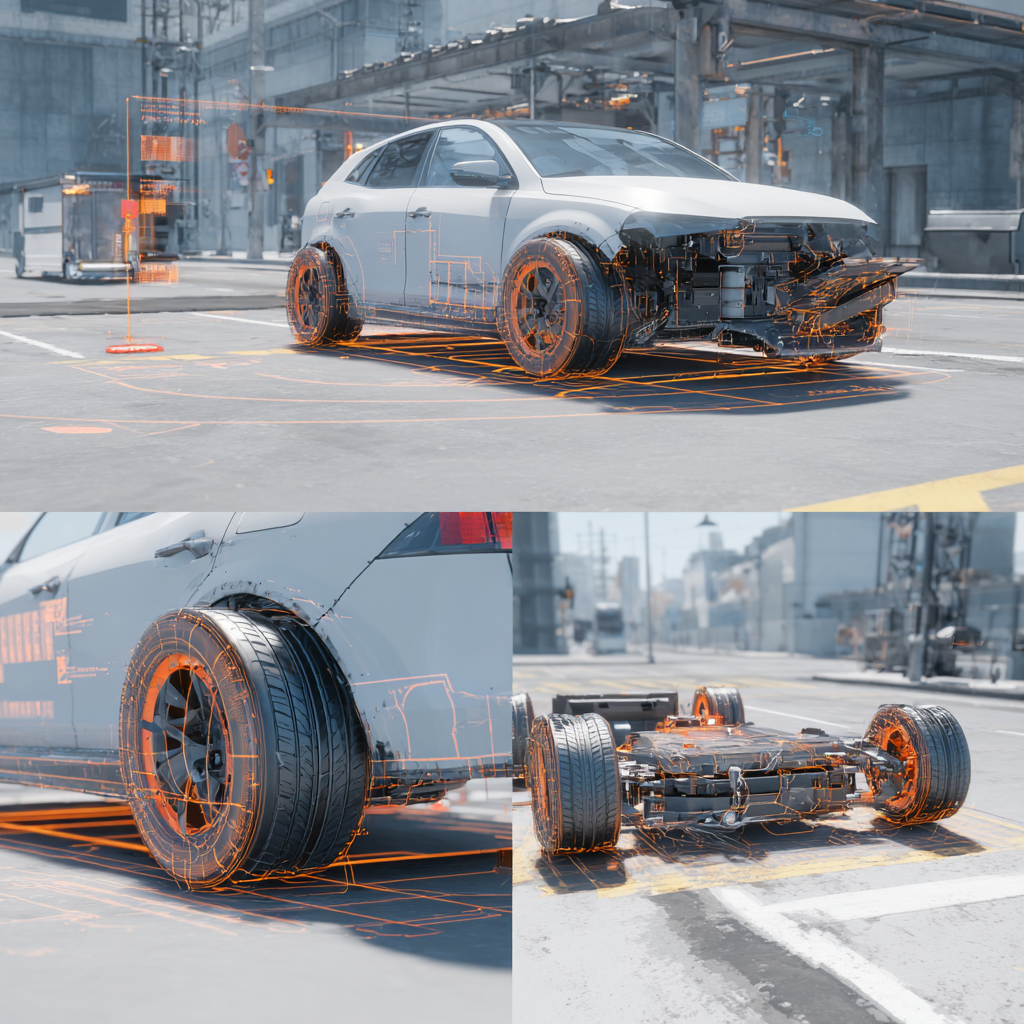
I. Introduction and Background
With the rapid development of vehicle intelligence and chassis drive-by-wire technology, consumer demands for ride comfort and vehicle handling stability have become increasingly stringent. To break through the physical and algorithmic limits of traditional chassis control solutions, a brand-new "Real-time Vehicle Stabilization System (RVSS) based on reinforcement learning algorithms" has emerged. Through forward-looking road point cloud scanning and AI autonomous learning decision-making, this system aims to create an ultimate ride experience as if driving on flat ground.
II. Pain Points and Problems of Previous Vehicles
For a long time, vehicle stability control has mainly relied on traditional Vehicle Stability Systems (VSS), such as Anti-lock Braking System (ABS), Anti-Slip Regulation (ASR), or Electronic Stability Program (ESP). However, as user demands for comfort increase, traditional solutions have gradually exposed three core pain points:
- Road perception "granularity" is too coarse: Traditional systems' judgment of road foundations mostly stays at the macroscopic classification level (such as asphalt, concrete, sand, etc.), completely unable to identify complex microscopic changes in actual road conditions, such as sudden potholes, bumps, or local tilts.
- "After-the-fact remedy" passive response: Traditional systems like ESP usually only intervene forcefully through the wheel braking system after the vehicle has already slipped, lost control, or experienced bumps. This lagging passive adjustment is not only abrupt but mainly used to ensure safety under extreme conditions, fundamentally unable to balance the smoothness of daily driving.
- Greatly compromised ride comfort: Because they cannot anticipate tiny uncertainties on the road in advance, when vehicles drive over potholes or gravel roads, violent wheel bouncing and body swaying inevitably occur. This high-frequency vibration and rocking have become an insurmountable gap in the comfort experience of traditional vehicles.
III. Core Innovations of This Solution
Addressing the above pain points, the RVSS system proposed in this solution has undergone disruptive architectural innovation, the core of which lies in the perfect combination of "beyond-visual-range fine perception" and "reinforcement learning proactive decision-making":
- Electromagnetic wave point cloud-level fine scanning (Perception Innovation): Abandoning rough road condition estimations, the new solution introduces a sensor matrix composed of electromagnetic wave transmitters/receivers (such as LiDAR, binocular cameras, etc.). It can emit a point cloud to the road ahead of the vehicle, obtaining a refined three-dimensional digital matrix of the road in real-time (ground state S1, including pothole depth, bump size, etc.).
- Multi-dimensional state fusion and feedforward control (Architecture Innovation): The system not only sees the road ahead clearly but also combines the vehicle's own state (S2) such as speed, steering angle, and suspension height to accurately calculate the time difference and exact position of the wheels rolling over obstacles. This transforms chassis control from "taking a passive beating" to "planning ahead."
- Introduction of reinforcement learning DQN algorithm (AI Brain Innovation): This is the soul of this solution. The system no longer relies on rigid rules manually written by engineers, but is equipped with a pre-trained reinforcement learning model. It inputs road conditions and vehicle conditions (S) into the model and directly outputs the optimal vehicle stability intervention action (A), such as adjusting the height and damping of the adjustable suspension in advance.
- Closed-loop reward mechanism (Self-evolution Innovation): Innovatively introduced a nine-axis sensor as the "referee". After the vehicle executes an action, the smaller the body sway or tilt amplitude (T), the greater the "feedback reward (R)" the system receives. Through continuous trial and error and iteration, this "AI brain" can autonomously learn the best response strategy for any complex road condition.
IV. Significant Advantages of the Technical Solution
Compared to traditional chassis control solutions, the RVSS system demonstrates paradigm-shifting significant advantages:
- Achieving "point-to-point" precise smoothing: Completely solved the problem of traditional systems being unable to handle fine road conditions. Whether facing speed bumps or continuous potholes, the system can precisely adjust the suspension of the corresponding wheel (e.g., actively compressing the suspension when encountering a bump, actively extending it when encountering a pothole) the moment before the wheel rolls over it, achieving one-to-one neutralization of road undulations.
- Ultimate ride experience upgrade: By minimizing changes in body posture, the bumpiness, dizziness, and noise vibration in the cabin are drastically reduced. Even when driving on unpaved roads, it can provide passengers with a "magic carpet"-like high-end comfort experience.
- Possessing "thousand cars, thousand faces" growth potential: Thanks to the reinforcement learning mechanism, the system supports a "offline + online" hybrid training mode. This means that after the vehicle is delivered, the chassis system can still continuously learn local specific road conditions and driver habits during daily driving, becoming smoother and smarter the more it is driven.
V. Summary and Outlook
In summary, the Real-time Vehicle Stabilization System (RVSS) based on reinforcement learning breaks the dual bottlenecks of traditional vehicles in environmental perception and control algorithms, truly realizing the drive-by-wire, feedforward, and intellectualization of the chassis. This is not only a major leap in automotive chassis technology but also lays a solid hardware foundation for the smooth operation of high-level autonomous driving in the future, possessing extremely high commercial implementation value and broad market prospects.
Detailed Information:
Invention Patent Detailed Document - Chinese Version:
Invention Patent Detailed Document - English Version:
Invention Patent Certificate:
PCT Certificate:
Certificate of Honor:
Case 2: AI Intelligent Cotton Fluff Patting Equipment and Patting Method for Cotton Fluff Products
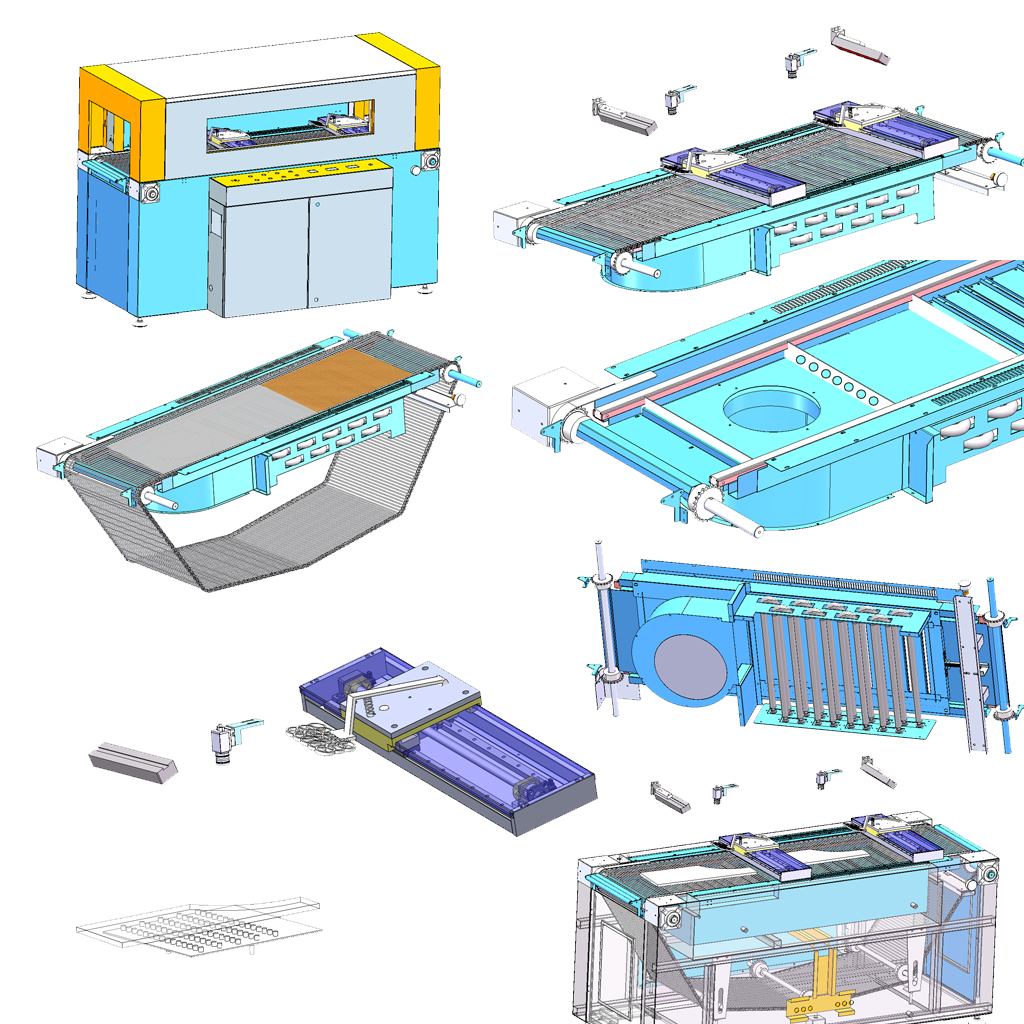
In the production of cotton fluff products such as clothing and home furnishings (e.g., down jackets, quilts, plush toys), the even distribution of fillings is the core indicator determining the product's warmth, comfort, and aesthetics. However, the traditional patting methods used in the industry for a long time have many insurmountable shortcomings. The AI intelligent cotton fluff patting equipment proposed in this solution completely subverts the traditional processing logic.
I. The Shackles of Traditional Models: Problems with Previous Equipment and Manual Labor
In the past, the patting of cotton fluff products mainly relied on pure manual patting or traditional bionic cotton patting machines. Both methods have obvious limitations:
- Manual patting is time-consuming and labor-intensive: Pure hand patting is extremely inefficient, and workers engaging in high-intensity mechanical movements for a long time are highly susceptible to occupational injuries such as shoulder, neck, and lower back pain.
- Traditional equipment pats "blindly": Most existing cotton patting machines can only perform indiscriminate overall mechanical patting on the product. The equipment cannot recognize the distribution state of the internal cotton fluff, resulting in thick areas not being patted apart and thin areas being over-patted.
- Poor patting effect and high energy consumption: Because it is blind patting, not only will there still be local accumulation and uneven distribution after patting, but it also includes a large number of invalid patting actions, drastically extending device operation time and leading to extremely high energy consumption.
- Low degree of automation: Many traditional devices also require manual cooperation for moving and flipping, which has high hidden costs and cannot truly be integrated into fully automated assembly lines.
II. Disruptive Reconstruction: Core Innovations of This Solution
To completely solve the "blind patting" problem, this solution introduces a "perception-decision-execution-feedback" AI intelligent closed-loop system. The main innovations are as follows:
-
1. Flattening pre-treatment to eliminate variables
Since it is difficult to accurately measure the internal filling density of cotton fluff products in a fluffy state, this equipment innovatively adds a flattening mechanism (such as a negative pressure wind hood pumping air or roller extrusion) before detection. By evacuating the internal air to make the product surface flat, the subsequent thickness detection can absolutely and truly reflect the filling amount of cotton fluff. -
2. "CT-level" optical and visual intelligent detection
The equipment is equipped with high-precision detection mechanisms (dot matrix laser, linear laser, or 3D camera). When the laser is projected onto the surface of the cotton fluff product, the image analysis system captures the size of the light spot or the deformation state of the light to calculate the thickness of different areas. Subsequently, the system will divide the product into standardized zones, score each zone with a "sparsity level", and finally generate a high-precision cotton fluff distribution state map. -
3. "Dynamic precise patting" combining software and hardware
Unlike the overall wild patting of traditional equipment, the controller of this solution generates an exclusive "patting strategy" based on the cotton fluff distribution state map. The patting mechanism uses an electromagnet or servo control, moving on a slide rail, to perform high-frequency, high-intensity focused patting only on areas where cotton fluff is thickly accumulated (sparsity level higher than the median), while patting less or not at all on areas with less cotton fluff. This achieves precise strikes of "patting wherever it is uneven." -
4. AI closed-loop iteration based on reinforcement learning
The equipment is not only equipped with pre-patting detection but also has a re-inspection mechanism at the back end of the process. The controller has a built-in AI-based patting strategy generation model. After each patting is completed, the system will automatically evaluate the patting effect; if the effect is not up to standard, it will not only automatically return for re-patting, but the AI model will also use reinforcement learning algorithms to continuously self-correct and iteratively optimize based on the feedback results, making the machine "smarter with every pat." -
5. Ingenious recycling of negative pressure exhaust and hot air drying
The solution makes a very ingenious energy-saving design in the hardware architecture. The high-pressure blower at the front end used to vacuum and "flatten" the cotton fluff product pumps the extracted airflow directly to the heating air box at the back end, turning it into hot air blowing towards the cotton fluff product being patted. The hot air not only reduces the humidity of the filling but also uses the static electricity generated by friction to make the cotton fluff fluffier, while achieving the recycling of exhaust gas.
III. Paradigm-Shifting Strike: The Overwhelming Advantages of This Solution
Compared to traditional processes, this technical solution not only replaces humans with machines but also replaces "low-level machinery" with an "intelligent brain," possessing the following significant advantages:
| Comparison Dimension | Traditional Cotton Patting Machine | This Solution: AI Intelligent Cotton Fluff Patting Equipment |
|---|---|---|
| Working Principle | Overall indiscriminate mechanical blind patting | Precise dynamic patting relying on optical detection and AI algorithms |
| Patting Quality | Poor, easily leaves cotton fluff dead corners or clumps | Excellent, achieves regionalized targeted elimination of accumulation, uniform distribution |
| Energy Consumption | High (includes a large number of invalid global patting actions) | Extremely low (eliminates invalid actions, reuses wind-heat circulation system) |
| Degree of Automation | Low (requires manual assistance for moving and flipping) | Extremely high (automatically completes the entire process of flattening-detection-patting-re-inspection) |
- Ultimate production efficiency: Targeted patting eliminates a large number of meaningless mechanical actions, drastically shortening the processing cycle of a single product, and achieves unmanned intervention, significantly reducing the factory's labor costs.
- Excellent product quality: The combination of heating, drying, and precise patting not only brings the filling distribution to an ideal state but also enhances the overall fluffiness and feel of the product.
- Extremely strong scenario adaptability: The equipment system does not rely on fixed product shapes. Thanks to visual zoning detection, whether it is a bulky heavy quilt, a small-sized irregular plush toy, or a down jacket, the equipment can automatically recognize and adapt the corresponding processing strategy, possessing extremely high commercial promotion value.
Detailed Information:
Invention Patent Detailed Document - Chinese Version:
Invention Patent Detailed Document - English Version:
Invention Patent Certificate:
Case 3: Smart Cat Litter Box and Its Automatic Litter Replenishment Device
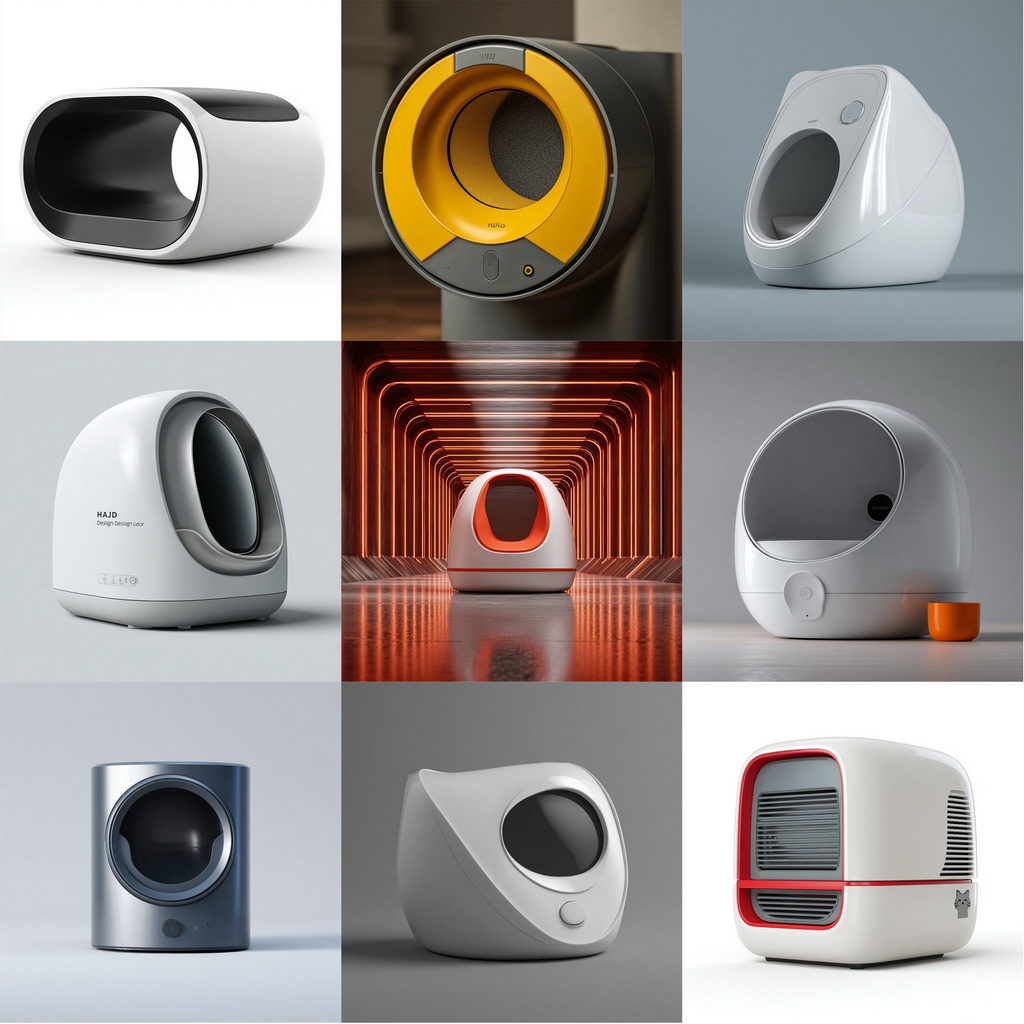
With the explosion of the pet economy, smart cat litter boxes have become a necessity for cat-owning families. However, the current smart cat litter box market is still in a "semi-automatic" or "pseudo-smart" stage, and users still face many unbearable pain points during use. A brand-new structural cat litter box introduced in this solution achieves a true sense of "freeing your hands" by completely reconstructing the internal waste clearing path and physical structure.
I. The Shackles of Traditional Equipment: Four Major Pain Points of Existing Smart Cat Litter Boxes
Although cat litter boxes on the market fly the banner of "automatic cleaning," serious problems are exposed in actual use:
- The "Smearing Tragedy" and Debris Pollution: The distance between the filter screen and the entrance of the waste bin of existing equipment is quite far. When the drum rotates to clean, clumped feces and urine blocks will undergo a long process of tumbling and colliding on the inner wall. This causes loose urine blocks to break easily and mix back into the clean cat litter; at the same time, un-dried feces will smear and stick extensively on the inner wall, causing serious secondary pollution.
- Deodorization treats the symptoms but not the root cause (Relies on consumables): Traditional equipment often dumps excrement directly and nakedly into the garbage bag, relying only on simple baffles to cover it. To deodorize, manufacturers can only rely on activated carbon bags or deodorizing sprays. This not only requires users to continuously purchase consumables, but the effect decays over time, and odors will still permeate the entire room.
- Cleaning is like a nightmare: The internal structure of most traditional smart cat litter boxes is complex and non-detachable. Faced with an inner wall covered in feces, users have to stick half their body into the machine for difficult wiping, going against the original intention of "automatic cleaning."
- Manual litter replenishment breaks the automation closed loop: Products on the market almost all require users to constantly monitor the remaining amount of cat litter and add it manually. Once the user forgets (such as during a business trip), too little cat litter will cause urine to stick directly to the bottom and emit a foul odor, and the automatic cleaning function of the entire machine will subsequently be paralyzed.
II. Disruptive Reconstruction: Core Innovations of This Solution
To completely break the above pain points, this solution has made a number of revolutionary innovations in mechanical structure:
-
1. "Zero Tumbling" Vertical Separation Technology (Solves smearing and debris problems)
This solution redesigns the position of the separation mechanism (filter screen) so that it is adjacent to the entrance of the waste bin. When the cat litter box rotates, clean cat litter passes through the filter screen into the litter collection bin, while the clumped excrement is precisely intercepted and slides into the waste bin almost instantly and all at once. It completely eliminates the process of excrement tumbling and rubbing over a long distance on the inner wall, fundamentally preventing debris backflow and the "inner wall smearing tragedy." -
2. "Coverage + Sealing" Dual Physical Odor Locking System (Solves the deodorization problem)
Abandoning the traditional consumable deodorization method, it pioneers a source odor-locking technology:
· First Barrier (Physical Burial): During separation, the structural design will cleverly guide a portion of clean cat litter to enter the waste bin together with the excrement, covering directly on top of the feces, simulating the cat's natural instinct for physical burial.
· Second Barrier (Gravity One-Way Door): A metal stamped one-way door is installed at the entrance of the waste bin. After the excrement falls in, the one-way door automatically and tightly seals the entrance under the action of gravity. A two-pronged approach locks odors 100% inside the bin. -
3. Passive Automatic Litter Replenishment and Progressive Litter Replacement (Solves the manual replenishment problem)
The equipment has a built-in highly ingenious litter replenishment mechanism. Through a special internal "U-shaped/V-shaped metering chamber," using the principle of gravity potential energy trap, no additional motor drive is required. Every time the machine rotates to clean, the quantified new cat litter in the metering chamber will automatically fall into the cat litter box. This not only maintains the optimal thickness of the cat litter but also cooperates with the above-mentioned "burial" action to discharge the polluted old litter and replenish new litter, achieving a progressive automatic renewal of the cat litter. -
4. Modular Fully Washable Quick-Release Design (Solves the cleaning difficulty)
The easily dirtied litter collection bin, waste bin, and separation filter screen inside the cat litter box all adopt a tool-free quick-release design. Users only need to unfasten the buckle or pull out the latch to extract these core components entirely and throw them directly into the sink for a 360-degree dead-angle-free rinse, completely bidding farewell to the dilemma of "drilling into the machine to wipe feces."
III. Paradigm-Shifting Strike: The Overwhelming Advantages of This Solution
Compared to existing smart cat litter boxes, this patented solution has extremely strong market competitiveness and application value:
- True ultimate hygiene: The "zero tumbling" design ensures that not only does the residual cat litter always remain pure, but the inner wall of the machine also remains smooth and clean at all times. The cat's toileting environment is healthier, and the owner has more peace of mind.
- Zero-consumable lasting freshness: The purely physical "new litter coverage + gravity metal door sealing" odor-locking solution never degrades in effectiveness. Users no longer have to spend money on dedicated deodorizing liquids or modules, greatly reducing subsequent usage costs.
- Achieving true "hosting-level" automation: Automatic cleaning coupled with automatic quantitative litter replenishment completely bridges the "last mile" of smart cat litter boxes. Even if the owner is on a business trip for half a month, there is no need to worry about sticky bottoms and crashes caused by running out of cat litter, truly realizing long-term unattended operation.
- Extremely low maintenance costs: Fully washable core components and mechanical gravity sensing replacing complex electronic sensors not only reduce the machine's failure rate but also make daily deep cleaning as simple as washing dishes.
IV. Summary
This technical solution does not take the detour of "adding complex electronic functions," but returns to the essence. With minimalist and ingenious mechanical structure innovation, it solves the four major industry stubborn diseases of "sticky bottom smearing, odor leakage, manual litter replenishment, and difficult cleaning" in one fell swoop, defining the new form of the next-generation truly "easy-to-use, maintenance-free" smart cat litter box.